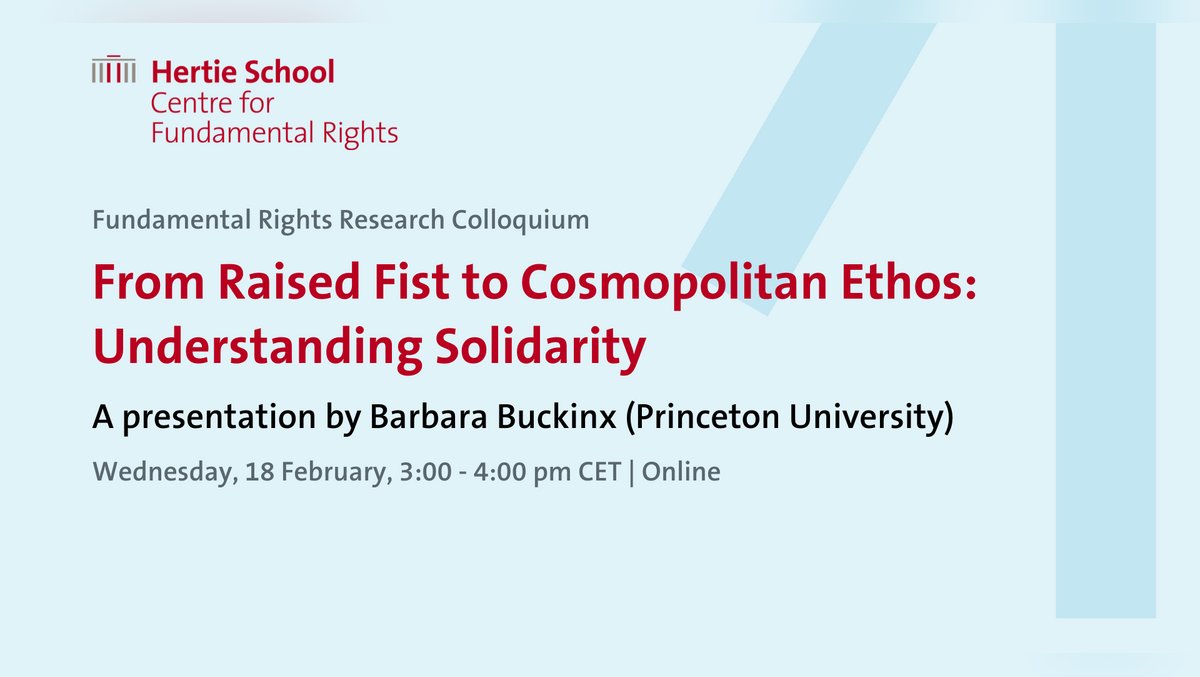
A presentation by Barbara Buckinx, Princeton University. This event is part of the Fundamental Rights Research Colloquium under the „Transforming Migration Governance: Towards a Solidarity-based Approach“ cluster hosted by the Centre for Fundamental Rights.
The most common symbol of solidarity is the raised fist. When we stand in solidarity with others, we are jointly resisting what we perceive as dominating power—whether abuses by authorities or impunity for powerful private actors—and signalling our refusal to let such injustices go unchallenged.
Because solidarity inherently challenges power, it naturally provokes counterpressure and backlash. One significant problem is the abusive deployment or perversion of the concept. Political leaders on the populist right, for example, do not reject solidarity outright; rather, they redirect it toward a specific national or ethnic group. Similar arguments appear in liberal democratic thought as well: theorists such as David Miller and, to a lesser extent, Stephen Macedo, have advocated solidarity with compatriots, prioritising social welfare within national boundaries over global concern.
Countering extreme-right projects, then, requires more than a generic defence of solidarity itself. What is needed is an argument in favour of moral cosmopolitanism, which treats all humans as equally worthy of concern and interrogates the ethical significance of boundaries. Many “solidarians” seem to embody this universal disposition: solidarity with migrants in Tijuana or with deportees is understood not merely as local or regional action, but as an expression of a broader, cosmopolitan ethos. This universal dimension appears to be a necessary, substantive feature of solidarity as we understand and practice it.
It is also useful to contrast solidarity with global citizenship. Both imply a cosmopolitan identity and are invoked to check abuses of power. In the republican tradition, global citizenship is an attitude and a practice that emphasises vigilance regarding the functioning of global institutions. Solidarity, however, adds an emotive component: there is beauty in solidarity, joy in resisting injustice, and a sense of community forged through shared struggle. Whereas global citizenship emphasises responsibility and ethical engagement, solidarity creates bonds with emotional depth, combining moral concern with shared human experience.
The presentation by Barbara Buckinx will be followed by a discussant’s contribution by Eleni Karageorgiou (Lund University) and a Q&A session with attendees
Prior registration is required. Registered attendees will receive the dial-in details prior to the event. Please register here.