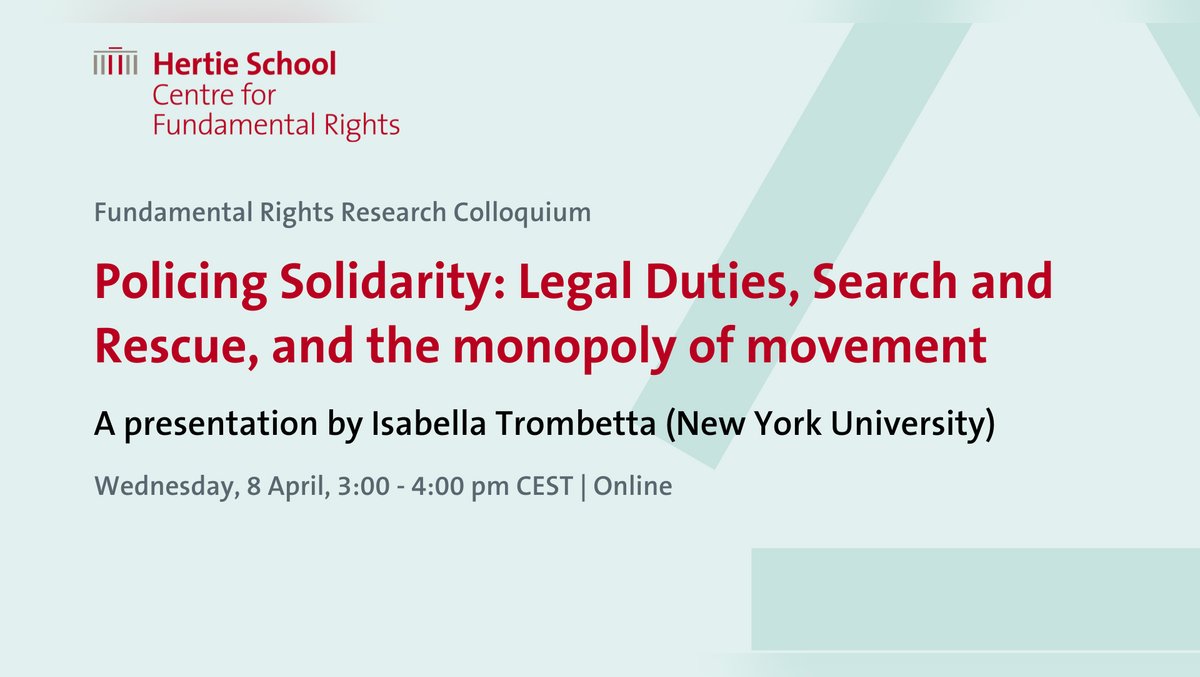
A presentation by Isabella Trombetta, New York University. This event is part of the Fundamental Rights Research Colloquium under the „Transforming Migration Governance: Towards a Solidarity-based Approach“ cluster hosted by the Centre for Fundamental Rights.
This presentation examines how states seek to monopolise rescue at sea in order to monopolise entrance into their territory, and how framing rescue as solidarity rather than duty enables criminalisation. If rescue comes from solidarity, it is reframed as smuggling, creating a link between the criminalisation of humanitarian aid, the militarisation of border control, and the erosion of fundamental rights. Although SAR is an international legal obligation at sea, and although assistance at land borders in several countries is covered by Good Samaritan laws, NGOs are increasingly treated as if they were performing voluntary acts rather than fulfilling duties that states neglect. Case studies include solidarity practices in the open seas, Polish activists and rescuers, and the Greek case of Sean Binder and Sara Mardini. Through discourse analysis of court documents, media narratives, and interviews, the project traces how solidarity language shapes legal and public debates and why solidarity becomes both a tool and a target in contested border regimes.
The presentation by Isabella Trombetta will be followed by a discussant’s contribution by Gabriella Sanchez (Georgetown University) and a Q&A session with attendees.
Prior registration is required. Registered attendees will receive the dial-in details prior to the event. Please register here.