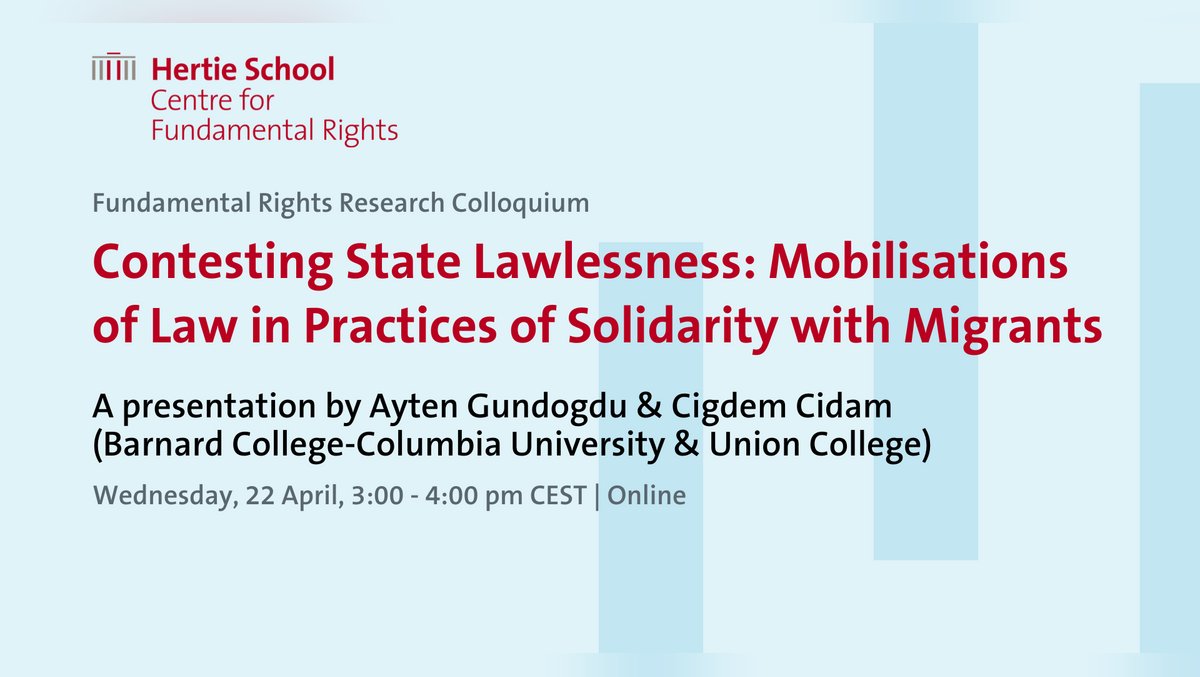
A presentation by Ayten Gundogdu (Barnard College-Columbia University) & Cigdem Cidam (Union College). This event is part of the Fundamental Rights Research Colloquium under the „Transforming Migration Governance: Towards a Solidarity-based Approach“ cluster hosted by the Centre for Fundamental Rights.
European states have engaged in a form of “lawfare” against migrants and those acting in solidarity with them, as they adopted penal laws sanctioning the facilitation of unauthorised migration and prosecuted NGOs undertaking rescue missions. Law has been central to not only states’ efforts to criminalise migration and solidarity but also the multitudinous efforts to contest that criminalisation. To examine this political contestation over law, this paper turns to the legal struggles of various NGOs that are currently conducting rescue missions in the Mediterranean, namely SeaWatch, Médecins Sans Frontières, SOS Mediterannée, and SOS Humanity. While all these organisations struggle against the criminalisation of rescue efforts by turning law into a site of contestation, they also relate to law and state sovereignty in significantly different ways. Analysing these differences generates valuable insights into the limits and possibilities of mobilising law in sustaining migrant solidarity in an increasingly hostile legal environment.
The presentation by Çiğdem Çıdam and Ayten Gündoğdu will be followed by a discussant’s contribution by Paolo Cuttitta (University of Palermo) and a Q&A session with attendees.
Prior registration is required. Registered attendees will receive the dial-in details prior to the event. Please register here.