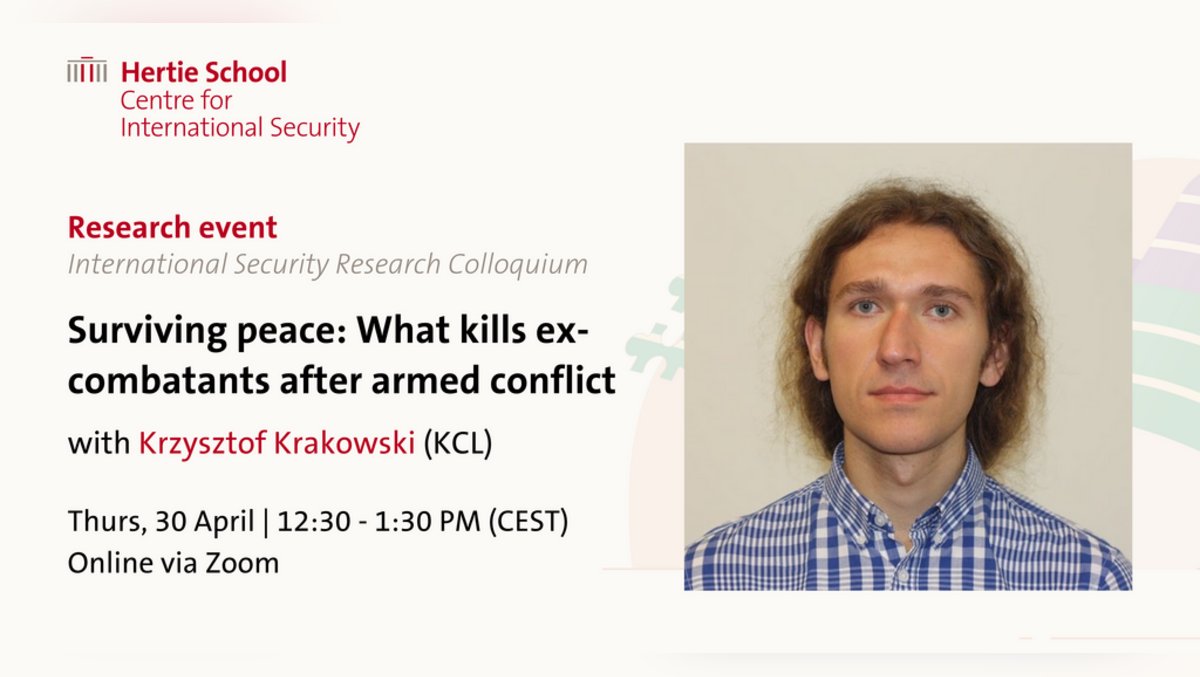
Krzysztof Krakowski (King’s College London) presents research on why demobilised ex-combatants are often killed, arguing that continued ties to former comrades increase their risk of violent death.
While demobilising armed groups is a key pathway to peace, demobilised combatants often face continued violence. What kills ex-combatants? We argue that relations formed during war drive violence against ex-combatants. Continued exposure to former comrades after demobilisation sustains connections that facilitate criminal reengagement and undermine legal reintegration by increasing the visibility of ex-combatants‘ past and related stigma. Our analysis focuses on Colombia, leveraging data on all 76,689 ex-combatants registered from 2003-2023, 6,014 of whom were killed. We find that exposure to former comrades increases the likelihood of violent death. This holds for former right-wing paramilitaries (AUC) and communist insurgents (FARC). Instrumental variable regressions, panel evidence, and causal mediation analyses support this relationship and the proposed mechanism. Qualitative interviews with ex-paramilitaries further illustrate how continued contact with former comrades generates risks of violence. These findings have important implications for demobilisation policy and the sustainability of peace.
This event is part of the International Security Research Colloquium hosted by the Centre for International Security.